Class A, Class B, Class C Industrial
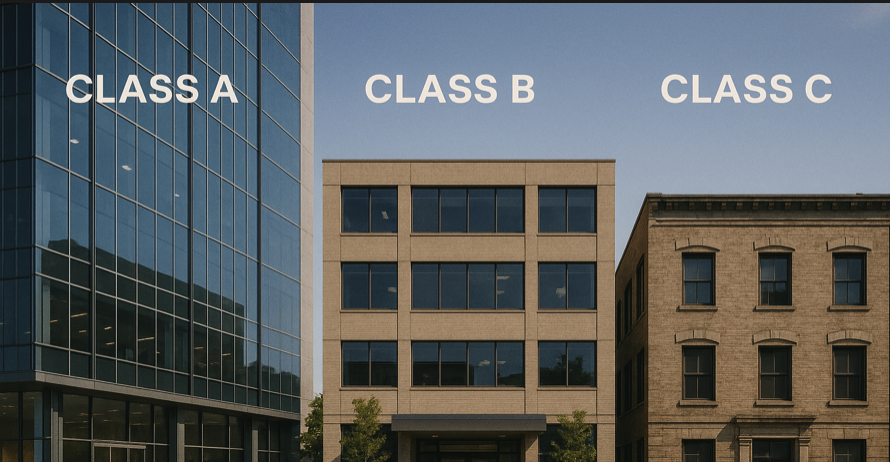
The commercial real estate industry uses a lot of lingo!
One of the ways to distinguish amongst property types, for instance, is by a property’s “class” rating. Generally speaking, properties are classified as either Class A, Class B, or Class C properties.
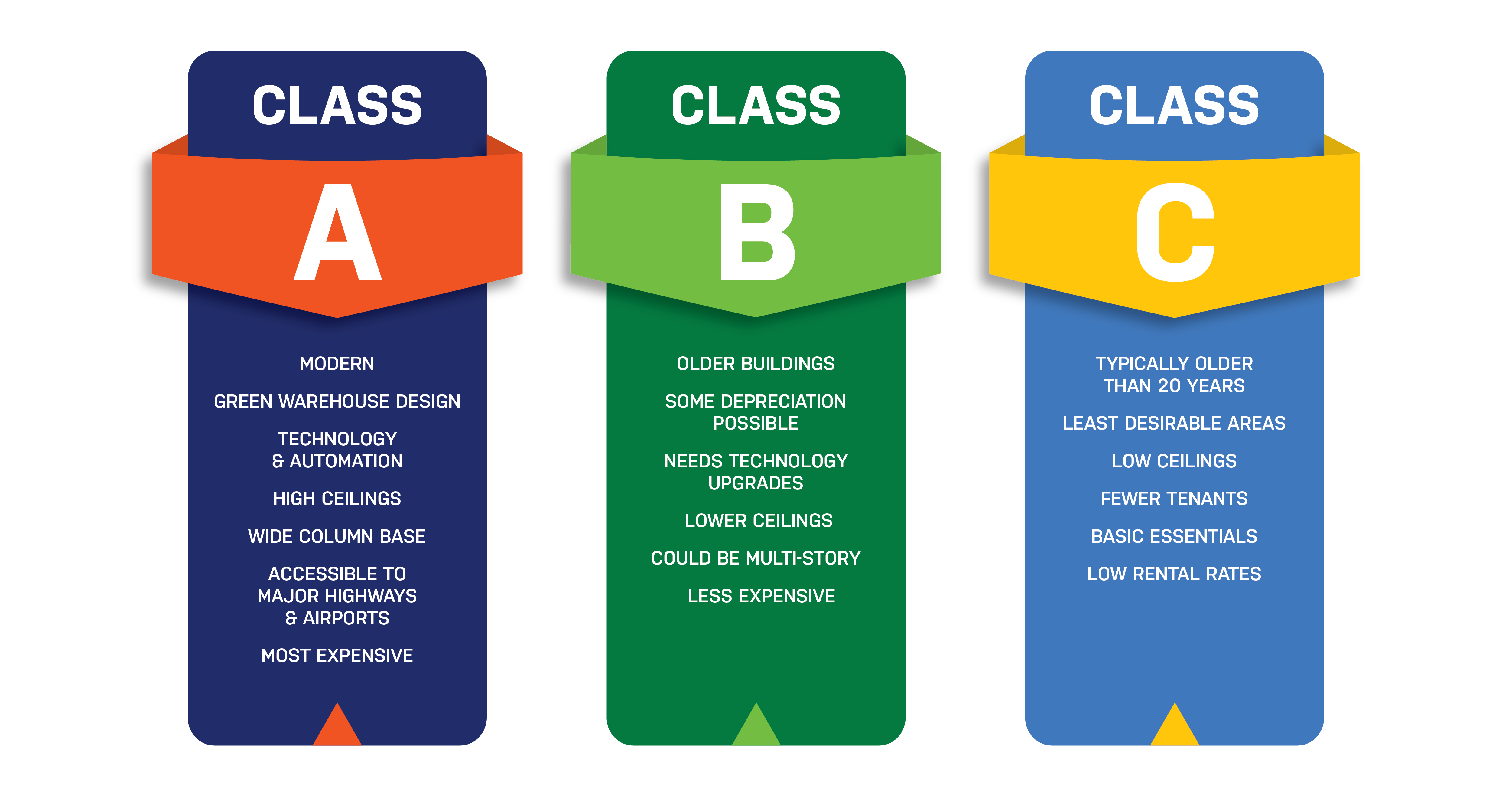
This is true across all real estate asset classes, regardless of whether you’re referring to office buildings, retail centers, apartment buildings, or industrial and warehouse facilities.
Class A properties tend to be extremely desirable, investment-grade properties with the highest quality construction and workmanship, materials and systems. They often contain unique architectural features, utilize the highest quality finishes, and utilize first rate maintenance and management.
Although there is no universally-accepted definition of a Class A (or Class B or Class C) properties, most in the industry consider Class A buildings to be newer with higher-quality finishes, amenities and accessibility. Class A properties tend to be located, and oftentimes have their own brand or lifestyle associated with them.
Class A properties are also distinguishable by the tenants they attract. Most Class A properties will be occupied by prestigious, credit-worthy tenants that are willing to pay above average rental rates on longer term leases.
Class A properties are frequently bought and sold by national and international investors, including institutional investors such as life insurance companies and pension funds, who are willing to pay a premium for quality assets.
Class B properties are often considered more of a speculative & riskier investment .
Well-located Class B properties can generally be purchased at a lower price (and therefore, have a lower barrier to entry), and in some cases can be renovated to Class A condition over time providing opportunities for value-add sponsors. As building improvements are made and leases turn over, the new owner can increase rents and improve the tenant mix. With thoughtful value-add strategies, an investor can realize greater returns through Class B properties than they might be able to achieve by investing in Class A buildings in the same market.
Class C properties may be considered the least “desirable” type of property, from both an investor and tenant perspective
Class C properties represent a significant value-add opportunity, particularly if otherwise well-located. For example, an investor might purchase and then immediately renovate a Class C office building. The renovation might include gutting the interior lobbies and common areas, including elevator landings, circulation corridors, etc.
An extreme makeover might include adding a new skin to the building façade. The interior is reconfigured to add amenities, such as an on-site gym, café, and renovated building lobby. Essentially, the property will have been repositioned from a Class C building to one solidly Class B, even Class A